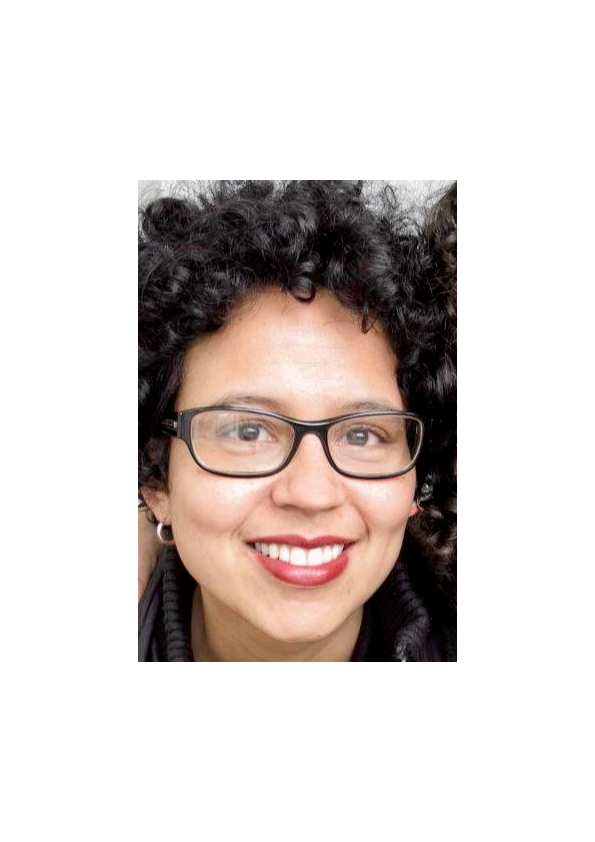
Rebeca Gomez Betancourt is a Venezuelan- French historian of economics and feminist economist. She is Professor of Economics at the University of Lyon 2 and Researcher at Triangle, ENS-Lyon. After completing her undergraduate studies in economics and philosophy in Venezuela, she earned her master’s and PhD in economics at the University of Sorbonne, Paris 1. She has held appointments as Visiting Professor at the Universidad de los Andes, Bogota, Colombia; Universidade Federal de Minas Gerais, Belo Horizonte, Brazil; DePaul University, Chicago; and La Trobe University, Melbourne, Australia. She has served as President of the Latin American Society for the History of Economic Thought (ALAHPE) and as President of the French Association for the History of Economic Thought (Association Charles Gide). She is currently a member of the International Association for Feminist Economics (IAFFE) executive board. She is the co-director of the master’s program in History of Economics at the University of Lyon 2. Her work focuses on the history of monetary thought and on the history of women and feminist economics. She is currently writing a herstory of economics with some feminist economists from IAFFE. She started her engagement with IAFFE in the young scholars committee, and also by studying the origins of feminist economics.
Email Address: Rebeca.GomezBetancourt@univ-lyon2.fr
http://triangle.ens-lyon.fr/spip.php?article1356
https://www.linkedin.com/in/rebeca-gomez-betancourt-b3509745/?originalSubdomain=fr
https://scholar.google.fr/citations?user=iPjpXYEAAAAJ&hl=fr
- What have been your journey leading you to RULE?
I have been teaching in the undergraduate international program since 2010. As part of this programme, I have taught the History of Economics course in the third year of the BA at RULE. During 8 year my courses were in French, now they are in English.
- Can you describe how the course(s) you teach are relevant in the current context?
The course I teach is highly relevant in today’s context because it offers an international and historical perspective on the evolution of economic ideas, beginning before the Industrial Revolution and examining debates that remain central today, such as protectionism versus free trade, the role of the State, and the underlying conceptions of the economic agent. By exploring how economics progressively became a more formal and mathematical discipline around the turn of the twentieth century, and how microeconomics and macroeconomics emerged as distinct fields, students gain a deeper understanding of the intellectual foundations behind the theories they encounter in their other economics and business courses.
At the same time, the course constantly connects past debates with present-day issues. Through collective discussions on different schools of thought—including perspectives and contributions from the Global South—students are encouraged to reflect critically on contemporary economic challenges and policy choices. Although the approach is historical, we always keep one foot in current societal debates, helping students see that economic theories are not abstract or fixed, but shaped by historical contexts, intellectual traditions, and evolving social concerns.
- Can you tell us about your experience as a teacher for an international program in Cambodia?
Teaching in Cambodia has been one of the most meaningful dimensions of my academic career. Each year, working closely with my students and witnessing their intellectual curiosity, commitment, and growth has been deeply rewarding. Over time, I have also had the privilege of reconnecting with former students who are now economists working in public institutions, private organizations, and international sectors. Seeing their trajectories unfold and knowing that my teaching played a small part in their journeys fills me with genuine pride and reinforces my dedication to teaching and mentorship.
- What do you like the most in teaching at RULE?
This experience, together with my courses in the history of economic thought in Lyon, Lausanne, and Brazil, has profoundly shaped my pedagogical approach. Engaging with diverse student questions, perspectives, and critical remarks across these different contexts has continually enriched my courses. It has encouraged me to broaden the canon, integrate new figures and lesser-known contributions, and present a more global and plural history of economic thought that reflects the diversity of intellectual traditions and lived experiences.
- Do you have any recommendations for future students and graduates?
Stay curious and keep learning—take notes, read as much as you can, and travel whenever the opportunity comes, because so much of what we understand comes from experiencing other worlds and perspectives. Remember the notion of “empathy” we discussed in class: put yourself in other people’s shoes, learn from every experience, and also believe in yourself, do not be afraid to try—you are more capable than you think!
You can find here her more recent publications:
- Bankovsky, Miriam, Marianne Johnson, and Rebeca Gomez Betancourt (2026). “Family Planning and Poverty in Marshall, Pareto, and Wicksell”. Journal of the History of Economic Thought. https://doi.org/10.1017/S1053837225100837
- Gomez Betancourt, Rebeca and Stephen Meardon (2025). “The Scientific Tariff: From Origins to the Travails of F. W. Taussig” European Journal of the History of Economic Thought. EJHET Vol 32:4, pp. 596-619. August 2025. https://doi.org/10.1080/09672567.2025.2530392
- Gomez Betancourt, Rebeca, Robert W. Dimand and Jérôme de Boyer. (2025). “How did the US Monetary System work under the National Banking System (1863-1913)”. Revue d’histoire de la pensée économique. 2025 – 1, n° 19. pp. 133-164. https://doi.org/10.48611/ISBN.978-2-406-18601-4.P.0133
- Gomez Betancourt, Rebeca (2024). Women Economists in the Global South: The Case of Two Venezuelan Women Ministers of Economy in 1968 and 1969. Review for the History of Economic Thought and Methodology. 1(1) pp. 1-26. https://doi.org/10.16995/RHETM.17465
- Bentemessek Nesrine and Rebeca Gomez Betancourt (2024). “Walter Bagehot on Central Bank Governance: Lessons from Lombard Street (1873) European Journal of the History of Economic Thought. Vol 31:5, October 2024. pp. 708-729. https://doi.org/10.1080/09672567.2024.2407326

 ភាសាខ្មែរ
 Exchange Programs and Partner Institutions
 List of Programs and Courses for Exchange Students at RULE
 Modalities and Guidelines for Exchange Programs
 Marking and Grade Equivalence
 Application form for Exchange at RULE