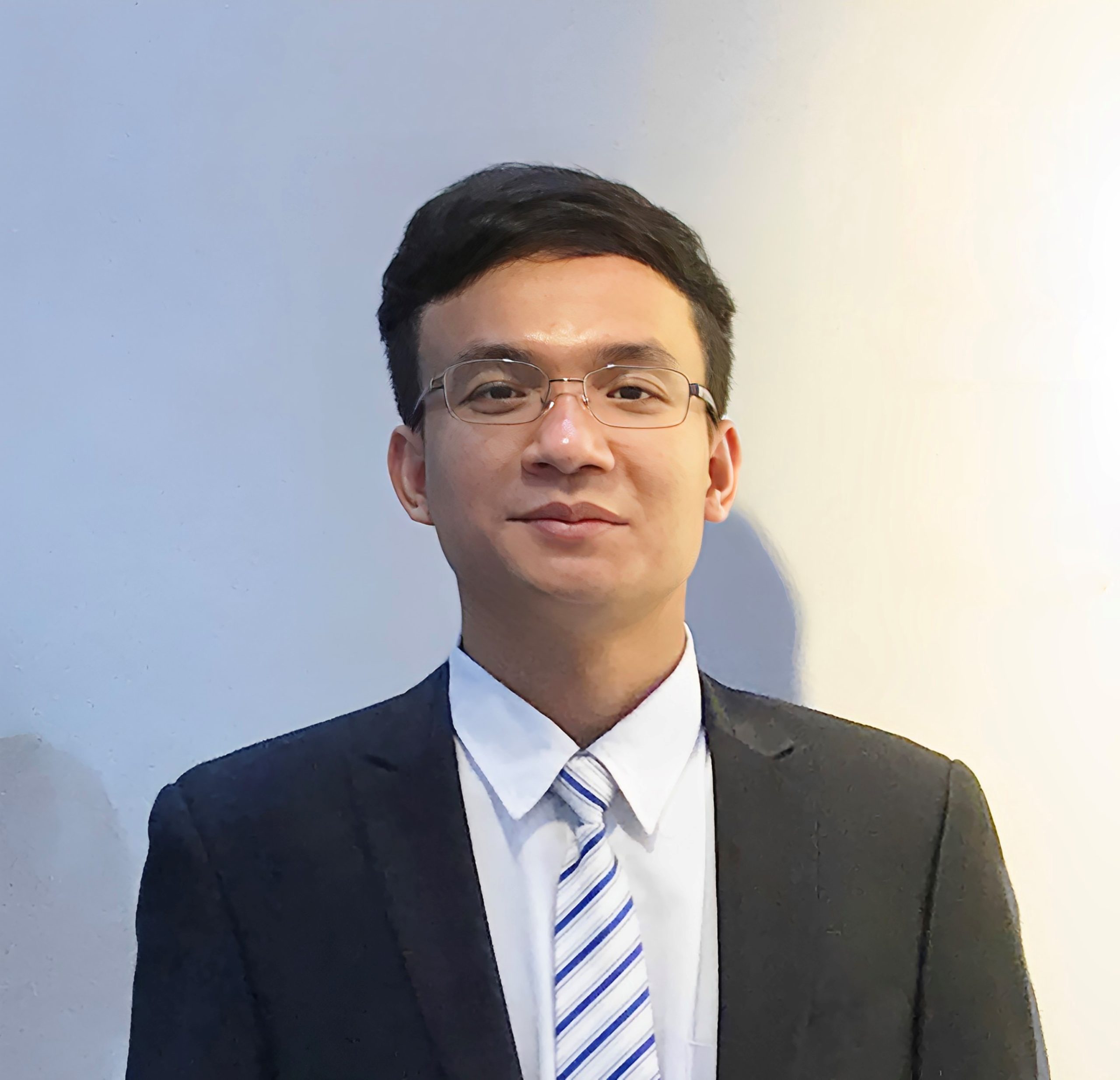
Dr. Puthearath Chan is President of the ASI Research Group and currently serves as a Regional Expert for ASEAN State of Finance for Nature (SFN) Regional Case Study 2025, with the Frankfurt School of Finance and Management (Germany). He is also a Research Fellow at the Lee Kuan Yew Centre for Innovative Cities, a research center of excellence, the only one of two institutions in Singapore that carry the name of the founding Prime Minister Lee Kuan Yew.
Dr. Chan is also an Advisory Board and Professor at the Faculty of Engineering, Paragon International University. He has 15+ years of professional experience as Regional & National Project Coordinator, Senior Researcher & Lecturer, and Supervisor for various sustainability-related projects and courses with national & international research universities, inter-governmental & governmental organizations such as ASEAN, ADB, GGGI & GIZ, and UN Agencies such as UNDP, UNCDF, UNOPS & UNITAR.
Dr. Chan obtained a master’s degree in green economic development and a graduate diploma in agricultural economics from AgroStudies International Center Ruppin Campus, ISRAEL, and a PhD in sustainable urban and regional development, focused on sustainable development goals (SDGs), from Hanyang University Seoul Campus, South KOREA. He also got a certified education in core concepts of circular entrepreneurship from the Rochester Institute of Technology, New York, USA.
Dr. Chan has taught our international master’s program in entrepreneurship & project management at the French Cooperation Department, Royal University of Law and Economics and Lumière Lyon 2 University (France) since the academic year of 2020-2021. At that time, he taught two courses, Sustainable Economic Development and Introduction to Social and Solidarity Economy, virtually due to Covid-19 pandemic. Since 2022-2023, he has taught only one course due to his limited time.
Dr. Chan also serves as Senior Researcher and Project Coordinator based in the Department of Green Economy (formerly Green Economy and Investment Division), General Directorate of Policy and Strategy, Ministry of Environment/ National Council for Sustainable Development. Furthermore, he is a Member of the National Steering Committee (NSC) Secretariat for the UN Partnership for Action on Green Economy, with five UN Agencies (UNDP, UNIDO, ILO, UNEP & UNITAR).
What have been your journey leading you to RULE?
“Helping and sharing with younger generations is always part of my journey as a PhD.”
My research and consulting services have been focusing on sustainability and its related issues. Like the rest of the world, my recent focused topics are circular economy, circular entrepreneurship, sustainable and climate finance, etc. With my intension to share my experience, new knowledge I gained from research and consulting services with prominent institutions around the globe to the younger generations, I found this master’s program in entrepreneurship and project management is a good place to share since the students are at the position to understand or have faced the above topics so that I can introduce the concepts and evoke their opinions on sustainable, green business models or circular entrepreneurship concepts, and after the course, they will be able to apply these concepts in their current or future career. By understanding these sustainability concepts, they can actively contribute to protecting our environment and mitigating the impacts of climate change.
Can you describe how the course(s) you teach are relevant in the current context?
The Social and Solidarity Economy (SSE) has been recognized as a viable solution to rebalancing economic, social, and environmental objectives. In 2023, the UN expressed SSE as New Economics for Sustainable Development. Since SSE are forms of economic activities and relations that prioritize social and often environmental objectives over profit motives, quite relevant to the United Nations’ 2030 Agenda for Sustainable Development, there is an increasing number of governments considering SSE a potentially powerful means for achieving the sustainable development goals (SDGs), especially in a context where economic and financial crises in recent decades have forced policymakers to search for alternatives to business as usual (UN 2023). In this regard, the SSE course is quite relevant in the current context.
Can you tell us about your experience as a teacher for an international program in Cambodia?
My experience as a lecturer for an international master’s program in entrepreneurship and project management at the French Cooperation Department, Royal University of Law and Economics and Lumière Lyon 2 University (France) since my first academic year of 2020-2021 can be described in three settings: Sharing, Debate, and Collaboration. Students are working in various industries, ranging from public services to private companies and civil society organizations, while some are already at a senior level. Therefore, my teaching experience here is such a great “Sharing” with/to each other, which means I encouraged them to speak and share their experience; in particular, they can bring the issues they have faced at their workplace to talk; more importantly, they can present the whole issue during the presentation group assignment. I observed that students can learn from each other and have fruitful “Discussion/Debate” on the raised issues. What I like most is that when I bring the international cases for them to the discussion to evoke their thinking on whether these cases can be applied successfully in Cambodia or not, and why? It’s a very interesting session, and the results are always beyond my expectations. Last but not least, they still actively contribute to and share with each other even after the course finished, mostly through a telegram group, including some gathering activities for work and study-related sharing and seeking “Collaboration” opportunities. I would say this is the real, short-term impact of the course on students’ careers and lives.
Selective works are listed as follows:
Chan, P. (2024). Urban Social Sustainability Assessment: A Case Study of Phnom Penh, Cambodia. Preprints. https://doi.org/10.20944/preprints202412.1951.v1
Chan, P. (2024). Cambodian Green Economy Transition: Background, Progress, and SWOT Analysis. World, 5(2), 413-452. https://doi.org/10.3390/world5020022
Chan, P., Gulbaram, K., & Schuetze, T. (2023). Assessing Urban Sustainability and the Potential to Improve the Quality of Education and Gender Equality in Phnom Penh, Cambodia. Sustainability, 15(11), 8828. https://doi.org/10.3390/su15118828
Chan, P. (2022). An Empirical Study on Data Validation Methods of Delphi and General Consensus. Data, 7(2), 18. https://doi.org/10.3390/data7020018
Chan, P. (2021). Child-Friendly Urban Development: Smile Village Community Development Initiative in Phnom Penh. World, 2(4), 505-520. https://doi.org/10.3390/world2040031
Chan, P. (2020). Assessing Sustainability of the Capital and Emerging Secondary Cities of Cambodia Based on the 2018 Commune Database. Data, 5(3), 79. https://doi.org/10.3390/data5030079
Chan, P., & Lee, M.-H. (2019). Prioritizing Sustainable City Indicators for Cambodia. Urban Science, 3(4), 104. https://doi.org/10.3390/urbansci3040104
Chan, P., & Lee, M.-H. (2019). Developing Sustainable City Indicators for Cambodia through Delphi Processes of Panel Surveys. Sustainability, 11(11), 3166. https://doi.org/10.3390/su11113166

 ភាសាខ្មែរ
 Exchange Programs and Partner Institutions
 List of Programs and Courses for Exchange Students at RULE
 Modalities and Guidelines for Exchange Programs
 Marking and Grade Equivalence
 Application form for Exchange at RULE