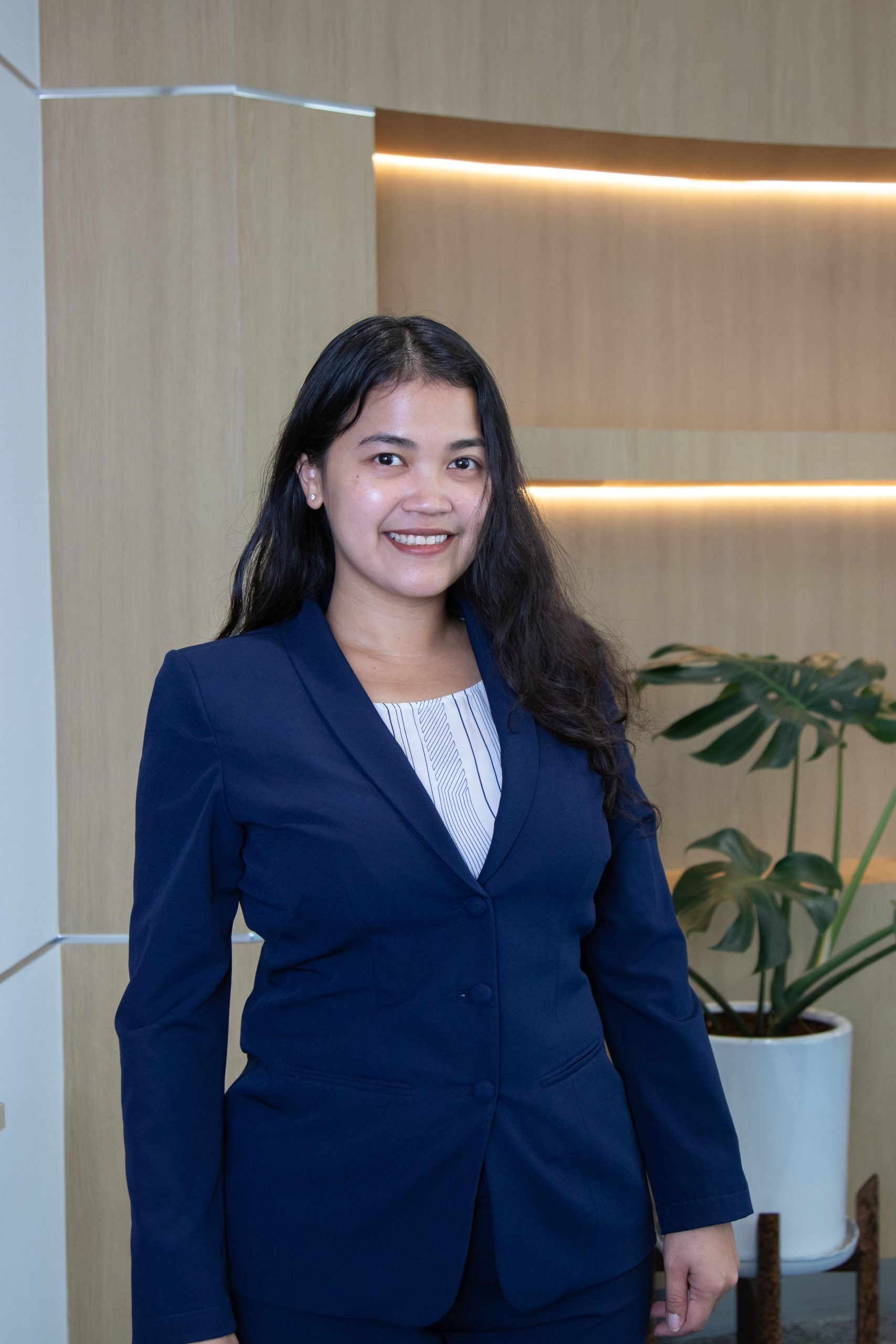
Nitikar Nith is the managing partner at Nith & Associate, associate in Tilleke & Gibbins’ Cambodia office and a commercial arbitrator at the National Commercial Arbitration Centre (NCAC).
She advises local and international clients on all aspects of doing business in Cambodia, with a particular focus on market entry, corporate setup, and ongoing regulatory compliance. Her practice covers corporate affairs and licensing, commercial transactions and contracts, banking and finance, energy and infrastructure, employment and immigration, real estate, as well as dispute resolution and arbitration. Recognized by The Legal 500 Asia Pacific as a leading associate for General Business Law, she is known for practical, business‑oriented counsel and execution on high‑value, cross‑sector matters.
In the education and professional development sphere, Nitikar frequently lectures and speaks on regulatory reform, corporate governance, responsible business practices, dispute resolution, and youth empowerment, drawing on her transactional and arbitration experience across regulated industries. She regularly shares practitioner insights on market entry, licensing, foreign investment structuring, rooftop solar and energy regulation, M&A execution, and arbitration practice in Cambodia.
Nitikar holds leadership roles that reflect a sustained commitment to access to education and justice. She serves as vice president of the French Cambodian Lawyers and Jurists Association and vice president of Komar Chey Association, where she leads free French language programs enabling high school students to compete for scholarships and pursue higher education in France. She sits on the Board of Directors of the French Cambodian Chamber of Commerce and Industry (2022–2024) and is an executive board member and senior researcher for the Sala Traju Association, advancing legal education and access to justice in Cambodia.
Nitikar holds a master’s degree in Commercial Law and Taxation from the University of Paris 8 Vincennes–Saint‑Denis and an undergraduate law degree from the Royal University of Law and Economics in Phnom Penh, jointly issued with the University of Lumière Lyon II. Fluent in Khmer, English, and French, she brings a multilingual, cross‑cultural perspective to teaching, mentorship, and institutional development. Her work exemplifies a dedication to education, equity, and the strengthening of legal institutions in Cambodia.
What have been your journey leading you to RULE?
I began my journey to the RULE as a student in the French Bachelor Program. I was privileged to obtain an Excellence Scholarship, which let me study for my master’s degree in Paris. This changed my life and made me more committed to justice and education.
When I got back to Cambodia, I felt a strong duty to give back. Teaching became my method of giving back by sharing the knowledge, chances, and principles that I had been privileged to get. I still teach and mentor now because I believe that education is a key part of empowerment and social progress.
RULE was where I started my legal career, and it is now where I work to inspire, help, and boost up the next generation of lawyers and other professionals.
Can you describe how the course(s) you teach are relevant in the current context?
I provide a practical course called Legal Aspects of Doing Business in Cambodia that prepares students to deal with market entry, setting up a business, getting licenses, and following the rules in a business world that is changing quickly. The course is about turning policies and laws into clear, actionable frameworks that businesses can utilize as Cambodia becomes more integrated with its neighbors and attracts more investment.
The course teaches practical skills in investment structuring, commercial contracting, corporate governance, labor and immigration compliance, and sector-specific pathways in areas like energy, infrastructure, manufacturing, and services. It does this by using current mandates and recent changes in the law. Students use real-world tools including regulatory mapping, document checklists, and contract clause drafting to link black-letter law with ethics, risk management, and working with stakeholders. This course also stresses how to avoid disputes and how to fairly divide up contract risks (such as penalty, limitation of liability, and dispute-resolution clauses) to help Cambodia’s modern economy thrive in a way that is good for the environment and for business.
Can you tell us about your experience as a teacher for an international program in Cambodia?
I have taught in the English-Language Based Master of Law program at the Royal University of Law and Economics (RULE), an international program that attracts a wide range of students and teaches in English. This is in addition to my work teaching Legal Aspects of Doing Business in Cambodia. I focused on ethical compliance and responsible business behavior while also connecting Cambodian law to worldwide standards. I use short lectures, case discussions based on real transactions, and formative assessments to help students learn how to apply what they learn. I evaluate students through attendance and participation, quizzes, midterm and a comprehensive final exam. These approaches motivate students to keep learning and solve problems in real life. This structure helps students learn how to find problems, lay out rules, regulate boards and shareholders, follow anti-corruption laws, and develop strategies for resolving disputes that are important for multinational companies. I work in RULE’s international context to encourage bilingual and multicultural engagement, making sure that students from different professional backgrounds can understand the content and class discussions. I draw on this experience in my current teaching, where I continue to incorporate real-time regulatory changes and practitioner insights to prepare students for working in their own regions and with colleagues from around the world.
What do you like the most in teaching at RULE?
The most important thing to me about teaching at RULE is the lively, international learning atmosphere. The students come from different nations and fields, which makes every debate more interesting and helps me connect Cambodian laws to global norms in a way that makes sense.The bilingual and multicultural environment encourages more involvement. Students have different legal and cultural points of view, which makes case-based learning and talking about real cases quite useful. RULE’s tight ties to real-world regulatory changes also help keep the classroom up to date with current practices.
Do you have any recommendations for future students and graduates?
Keep learning, stay curious, and ask questions. Use every lecture, case, and interaction as a chance to learn more and make better decisions. The legal area grows when people keep asking questions and thinking about things.

 ភាសាខ្មែរ
 Exchange Programs and Partner Institutions
 List of Programs and Courses for Exchange Students at RULE
 Modalities and Guidelines for Exchange Programs
 Marking and Grade Equivalence
 Application form for Exchange at RULE