
 ភាសាខ្មែរ
 Exchange Programs and Partner Institutions
 Nomination Procedure and Curricula for Exchange Students
 Marking and Grade Equivalence
 Application form for Exchange at RULE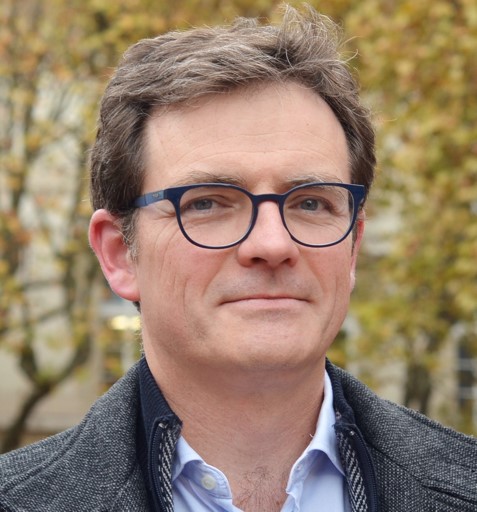
Jérôme BLANC is full professor in Economics at Sciences Po Lyon since 2015, previously Associate professor at Université Lumière Lyon 2 (1999-2015).
His works deal with money and the plurality of its forms and practices, mainly analyzed through socioeconomic viewpoint and history of ideas.
Interested in monetary plurality, he published Les monnaies parallèles. Unité et diversité du fait monétaire (Paris : L’Harmattan, 2000). He focuses especially on a particular dimension of monetary plurality, that is, alternative, complementary, community or local currencies. On this subject, he co-authored Une économie sans argent : les systèmes d’échange local (SEL) (Paris : Seuil, 1999, directed by J.-M. Servet), edited Monnaies sociales : Exclusion et liens financiers, rapport 2005-06 (Paris : Economica, 2006) and published Les monnaies alternatives (Repères, 2018). He then coedited with Bruno Théret the book La Monnaie entre unicité et pluralité : explorations théoriques et empiriques (Classiques Garnier, 2026).
He organized the first international academic conference on this topic in February 2011, in Lyons. In 2015, he co-founded RAMICS (Research Association on Monetary Innovation and Community and Complementary currency systems), and served as its first president (2015-19). He is a member of the Editorial board of the International Journal of Community Currency Research (IJCCR).
Regarding the history of ideas, he notably worked on Jean Bodin’s monetary writings, published with Ludovic Desmedt the collective book Les pensées monétaires dans l’histoire : l’Europe, 1517-1776 (Classiques Garnier, 2014) and an anthology of French-speaking institutionalist monetary theories: Institutionalist Theories of money. An Anthologie of the French School (Palgrave McMillan, 2020), translated from the French (Presses universitaires de France, 2016) (also translated in Spanish and Chinese).
Drawing on the case of community currencies, his works also deal with social and solidarity economy and socio-economics. He coedited the collective book Les contributions des coopératives à une économie plurielle (L’Harmattan, 2012, with Denis Colongo), Tensions sur les ressources. L’économie sociale en recomposition (Presses universitaires de Louvain, 2018, with Emilie Lanciano and Damien Sauze), and the book Pour une socioéconomie engagée : monnaie, finance et alternatives (Classiques Garnier, 2018) under the collective name of Farinet (with Isabelle Guérin, Isabelle Hillenkamp, Solène Morvant-Roux and Hadrien Saiag). He collaborates to the Chair of Social and solidarity economy of the Université Lumière Lyon 2 and is a member of the Francophone inter-university network of social and solidarity economy (RIUESS).