
 ភាសាខ្មែរ
 Exchange Programs and Partner Institutions
 Nomination Procedure and Curricula for Exchange Students
 Marking and Grade Equivalence
 Application form for Exchange at RULE
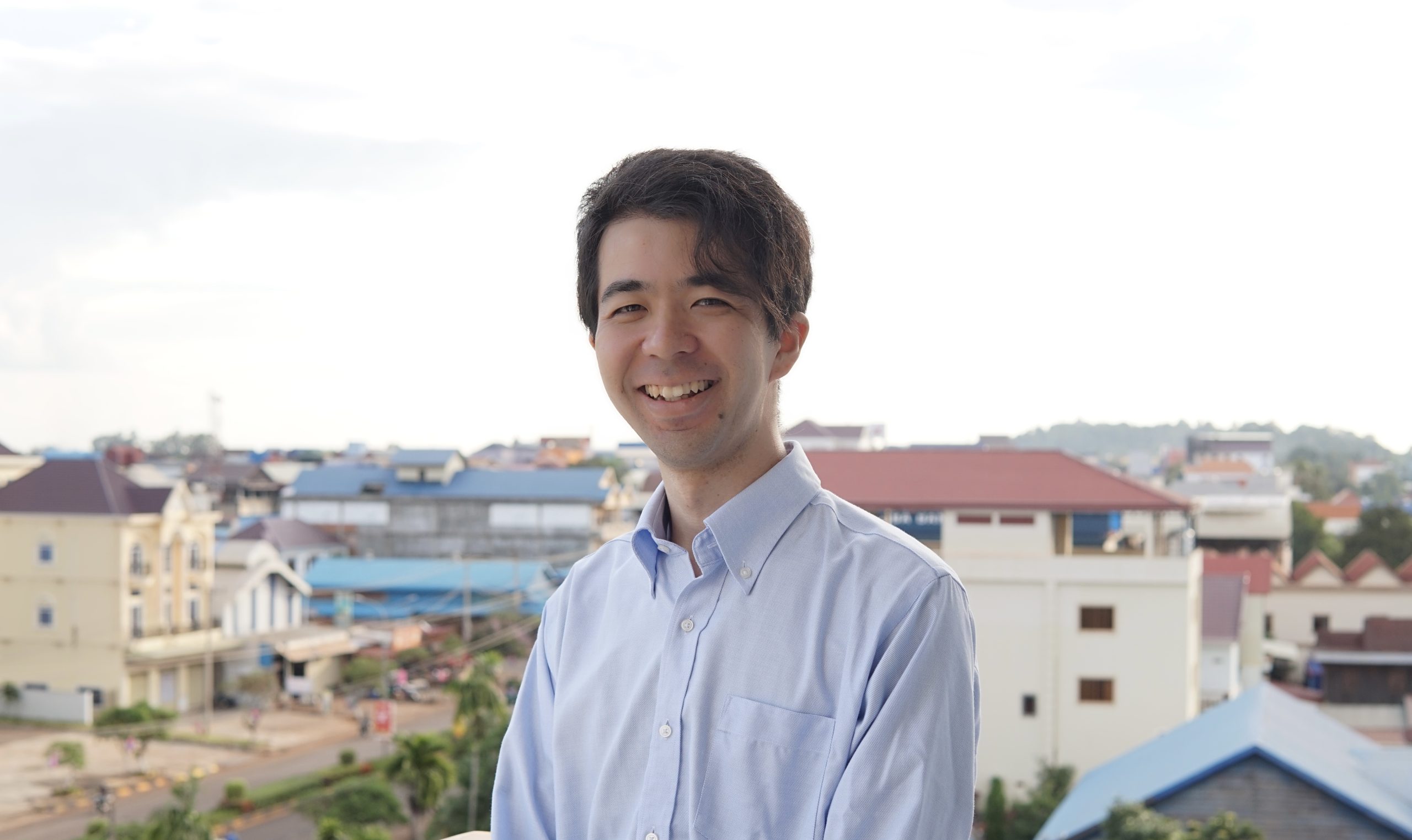
Yuki is an economist specializing in education and health. He uses experimental and quasi-experimental research methods to identify the causal impact of interventions on key outcomes. His ongoing projects focus on inclusive education, social protection, and childhood immunization in Cambodia. Previously, he led dozens of large-scale surveys and conducted quantitative analyses in Cambodia and Japan with research institutes, non-governmental organizations, and government ministries. He obtained a master’s degree in economics from the Stockholm School of Economics and a bachelor’s degree in economics from Keio University, and is currently pursuing a PhD in economics at Keio University.
Yuki Kanayama
What have been your journey leading you to RULE?
My journey to RULE has been shaped by a strong commitment to strengthening economic training for future decision-makers in Cambodia. After spending several years working in Cambodia, I observed a growing demand for sound policy analysis but also a considerable gap in technical skills. To help bridge this gap and promote evidence-based decision-making, I sought an opportunity that would allow me to combine teaching and research within an international academic environment.
Can you describe how the course(s) you teach are relevant in the current context?
At RULE, I teach public economics. In Cambodia and globally, evidence-based decision-making is becoming increasingly important. In response, my course aims to equip students with thematic knowledge and analytical skills. By learning to apply economic reasoning and empirical methods, students can better interpret data, evaluate interventions, and contribute to informed decisions in both the public and private sectors. I also introduce recent research papers and the advanced methods they use, so that students better understand how economists conduct research in practice nowadays.
Can you tell us about your experience as a teacher for an international program in Cambodia?
Teaching in this international program has been both inspiring and intellectually stimulating. Students bring diverse perspectives to classroom discussions and contribute unique ideas. Faculty members with extensive experience in Cambodia and abroad are highly knowledgeable, complementing students’ bright minds. In my course, I strive to foster open dialogue while maintaining a strong emphasis on critical thinking and academic rigor.
What do you like the most in teaching at RULE?
What I value most about teaching at RULE is the enthusiasm and curiosity of the students. They are eager to learn and apply economic tools to both local and global challenges. I also appreciate the support RULE provides to faculty, which allows me to offer students flexible guidance and continuously improve my teaching each year.
Do you have any recommendations for future students and graduates?
Let’s build skills together to bridge evidence and action. Some people act without evidence, while others study evidence without taking action. We need both evidence and action. Using evidence to guide action ensures that our decisions truly benefit everyone.
He has published several papers in internationally recognized peer-reviewed journals, including Asia Pacific Journal of Public Health, Asian-Pacific Economic Literature, and Pacific Economic Review. A complete list of his publications is available on his website: https://sites.google.com/view/yukikanayama.
Most notably, his recent paper “Changing Effects of Birth Order on Education Over Time: Evidence From Cambodia” published in The Journal of Development Studies stands out for its extensive use of three Cambodian censuses to examine long-term changes in educational inequality within households.